


Let customers speak for us
from 56 reviewsbestelde prima, maar verrassing hoe mooi en met zorg het verpakt werd!
Bij thuiskomst pakketje gevonden, zoals aangegeven netjes door de brievenbus bezorgd.
Zeer mooi en zorgvuldig verpakt, blij mee!
Zou hier zeker vaker wat bestellen.
.
Prachtige website en fijne service. Mooie collectie zilveren juwelen. Pakjes komen supersnel en mooi verpakt aan.
Absolutely love it!!,it was worth the wait, thank you
Waar voor zijn geld !! Super blij mee. Snelle levering. 👍👍
Goed verstuurd, ik ga eens vaker kijken op jullie website
Wederom een prachtige miniatuur. Zeer tevreden klant.
Prachtige miniatuur uit een bijzondere plaats voor miniatuurzilver. Goed verpakt. Een aanrader.
Heel mooi en glimmend. Ingepakt in kadopapier, erg leuk .
Ben zeer tevreden. Is nog mooier dan op afbeelding
The bracelet exceeded my expectations. Highly recommend this shop. Excellent service and communication.
Heel tevreden over de oorbellen, de verzending. Een aanbeveling waard!
Fraai stukje, goed ingepakt.
Kundig verpakt, sjieke verassing.
Zilverwebsite.nl
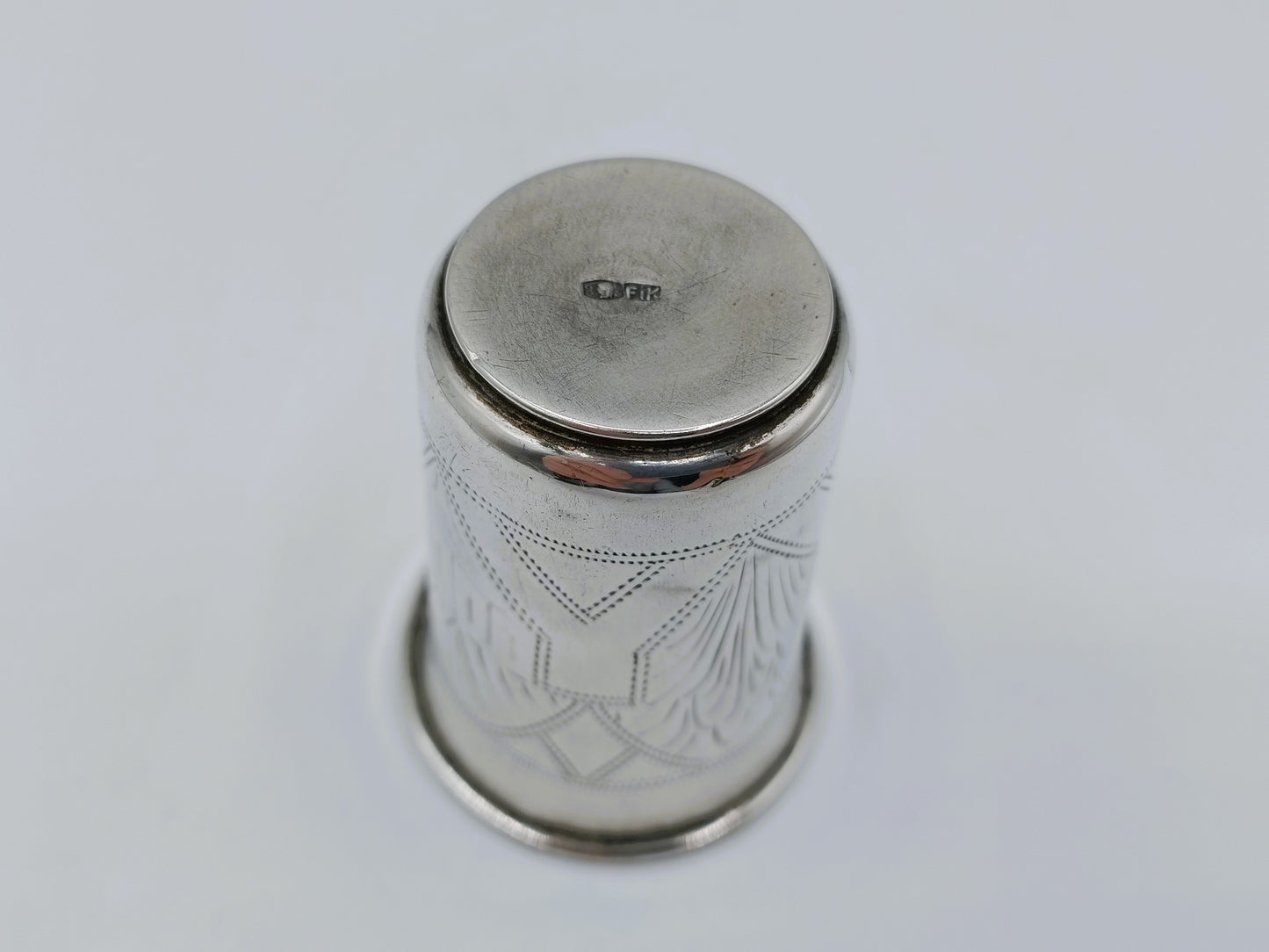
Silver kiddush cup, FJ Knoll, Breslau, Poland, 19th century
Couldn't load pickup availability
Antique silver kiddush cup – attributed to Franz Josef Knoll (master's mark Fik)
This extraordinary kiddush cup is a fine example of 19th-century craftsmanship and is attributed to Franz Josef Knoll (born ca. 1800 ), a silversmith with a remarkable life.
Knoll learned the craft between 1815 and 1821 as an apprentice to Johann Christian Wilhelm Stuppe . On February 24, 1826 , he obtained citizenship in Breslau , which officially allowed him to establish himself as an independent craftsman. In 1839 , he moved to Gottesburg , while retaining his citizenship rights in Breslau. By April 7–8, 1851, at the latest, he returned to Breslau, where he was admitted to the guild. A few years later, in 1855 , he emigrated to the United States , which gives his work an additional historical dimension.
This kiddush cup reflects the solid quality and classic style characteristic of silverwork from this period. The object combines religious significance with a rich craft and migration history, making it particularly attractive to collectors of Judaica and historic European silver.
A rare and characterful piece that is not only suitable for use during Shabbat and holidays, but also provides a tangible connection to the life and work of a 19th-century silversmith.
Height: 5.5 cm. Diameter: 4.3 cm.
Weight: 30.6 grams.
Provenance: From the Devotionalia collection.
What is Kiddush?
Kiddush ("sanctification") is a short ceremony in which a prayer is said over a cup of wine in the evening, at the beginning of the Sabbath and other holidays. The prayer is said by the head of the house in the presence of the entire family, immediately after returning from the synagogue, before dinner, and is repeated the following morning. The prayer consists of two blessings: one over the wine and one over the Sabbath or other holiday. The father uses the Kiddush cup with the appropriate capacity, and each family member has their own, smaller Kiddush cup. This is considered healthier than drinking directly from the same large, communal Kiddush cup.
The Aish Rabbi answers: The reason for sharing the wine (or grape juice) is that the Sages recommend partaking of a "cup of blessing" (kos shel bracha)—that is, a cup used for a mitzvah ("commandment"). In this way, the "blessing" is shared with the other attendees. Therefore, after reciting the Kiddush, a person typically pours some wine from their own cup, which is then poured into smaller cups for the attendees.
It is important to share the wine properly. The host should pour some wine from their own cup before drinking. Not only is drinking from someone else's cup considered offensive by many, but only pure wine should be shared. Once someone has drunk from it, the wine is considered pagum (literally, "defective") and is no longer valid for the Kiddush—and only valid wine confers a blessing when shared. Alternatively, the person saying the Kiddush can pass their own cup after drinking. Even though that wine has already been drunk, because it is still in the original cup, it is not pagum and may be shared.
If the host pours wine from their own cup before drinking, they should be careful to pour only a small amount—so that even after pouring, they still have the full required amount of revi'it in their cup. (See this previous answer regarding the required amount of wine.) If their cup is small and there are many guests, a common solution is to pour a portion of wine from the bottle into a separate cup beforehand, and then pour a little kiddush wine into that cup before sharing it with others.
Finally, those present must wait to drink the wine they have been given until the host begins drinking. In fact, after the host pours some wine from their cup into a second cup, they must drink it immediately before sharing the poured wine with others.
To share

